On March 3, the Mobile World Congress (MWC 2025) was held at the Fira Gran Via exhibition center in Barcelona, Spain. AR/VR glasses, hailed as the next generation of mobile communication products, were among the key products showcased by exhibitors.

Samsung unveils its first XR headset, Project Moohan, featuring Micro OLED technology . Samsung showcased its first extended reality headset based on the Android XR platform—Project Moohan. This product was developed in collaboration with Samsung, Google, and Qualcomm. In terms of design, Project Moohan adopts a similar look to ski goggles and Apple's Vision Pro. Primarily made of plastic, it is lighter and less burdensome to wear. It features a thick, comfortable headband and an adjustable knob for easy adjustment of wearing comfort.

Image source: XR Today
In terms of hardware configuration, this device is equipped with a Qualcomm Snapdragon XR2+ Gen 2 chip, supporting ultra-low latency (as low as 12ms) for a more natural interactive experience. Furthermore, it features a high-resolution Micro OLED microdisplay and multiple sensors, supporting eye tracking and gesture recognition. Users can control the device through eye movements, gestures, and finger movements, performing various operations such as Google Maps navigation, watching live sports events, and planning trips via Gemini.
Project Moohan is still under development, and Samsung has not yet announced the specific price and release date, but has confirmed that it will be launched to developers in the coming months.
Transsion showcases new AI/AR glasses featuring Micro LED and resin waveguide . Transsion Holdings exhibited two new AI/AR glasses: TECNO AI Glasses and AI Glasses Pro.
AI Glasses is an AI-powered pair of glasses made of lightweight composite materials and aluminum alloy. It features a camera and the Tecno AI voice assistant, offering functions such as music playback, photo/video recording, AI object recognition, information summaries, and memos.

Image source: Transsion Holdings
AI Glasses Pro further introduces display functionality, employing a dual-lens single-green Micro LED + resin waveguide solution. Through the introduction of the micro-display, AI Glasses Pro can further realize functions such as navigation and text prompts. The pricing and release date for these two products are currently unknown.
Thunderbird Innovations Introduces Next-Generation XR Glasses RayNeo Air 3s
At MWC 2025, Thunderbird Innovations officially launched its latest XR glasses—the RayNeo Air 3s. In addition, Thunderbird also showcased two new products previously exhibited at CES 2025: the RayNeo X3 Pro full-color AR glasses with AI technology and the RayNeo V3 smart photography AI glasses.

RayNeo Air 3s (Image source: Thunderbird Innovation)
The RayNeo Air 3s features a Birdbath optical solution for its display, equipped with 3840Hz high-frequency dimming technology, a 200,000:1 contrast ratio, and 154% sRGB color gamut. Furthermore, the Air 3s boasts a massive 201-inch virtual screen with TÜV Rheinland certified eye comfort technology. Additionally, the Air 3s utilizes an advanced four-speaker setup, providing the most immersive audio experience in its class.
The RayNeo X3 Pro features dual-lens full-color Micro LED waveguide display technology and is powered by a Qualcomm AR1 Gen 1 chip. Weighing approximately 85 grams, it boasts portability and advanced AI capabilities, including instant translation, automatic voice summarization, and contextual guidance.
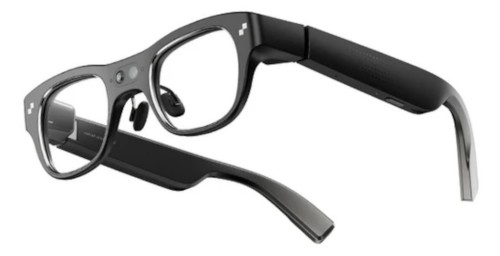
RayNeo X3 Pro (Image source: Thunderbird Innovation)
The RayNeo V3 features a 12-megapixel Sony IMX681 sensor and Quad Bayer HDR technology, delivering vibrant colors and rich detail even in challenging lighting conditions. Furthermore, the V3 is equipped with a three-microphone array and advanced noise reduction algorithms to ensure clear audio. Its built-in AI capabilities enhance both entertainment and productivity.

RayNeo V3 (Image source: Thunderbird Innovation)
Meizu showcases StarV Air2

Image source: Meizu Star Era
Meizu showcased its StarV Air2 AR smart glasses, which were released last September. Weighing only 44 grams, the glasses feature an integrated prescription lens design. In terms of display, the StarV Air2 utilizes the JBD "Hummingbird Mini II" light engine and waveguide display solution, along with StarVision's self-developed imaging system, achieving a peak brightness of 2000 nits.
Cellid showcases its self-developed AR glasses prototype .<br /> During MWC 2025, Japanese AR glasses optics manufacturer Cellid allowed visitors to experience real-world applications of AR technology through interactive demonstrations, including the AR glasses reference design (verification model) released last November and the latest waveguide technology.

Image source: Cellid
In recent years, Cellid has created several AR glasses-related products, including the "Cellid Waveguide 60" AR glasses display module sample equipped with a 1.2 cubic centimeter single green Micro LED projector; the release of an AR glasses Micro LED optical module with a field of view of up to 60 degrees; and the AR glasses reference design released last year, which adopts an optical see-through waveguide display solution.
MicroOLED, STMicroelectronics, and Quanta Computer release AR smart glasses reference design
MICROOLED, STMicroelectronics, and Quanta Computer have jointly developed a reference design for AR smart glasses. The product aims to provide sports and outdoor enthusiasts with an instant information display experience, meeting users' needs for instant access to key information in dynamic scenarios.

Image source: MICROOLED
Quanta led the development of this AR smart glasses reference design, while STMicroelectronics' STM32U5 series microcontrollers provided stable core computing power for the glasses, and the MICROOLED display module has excellent low power consumption performance, which can effectively extend the device's battery life and present users with clear, delicate and smooth visual images.
Micro LED and OLED continue to penetrate the smart glasses market . From CES 2025 at the beginning of the year to MWC 2025, the smart glasses market has been booming. With the support of AI artificial intelligence technology, various smart glasses products are frequently released, bringing consumers more choices of electronic products.
The "second spring" in the development of smart glasses is also largely driven by the continuous upgrading of hardware technology. In particular, the continuous breakthroughs in Micro LED and Micro OLED microdisplay technologies in recent years have brought more hope for the realization of lightweight, high-definition smart glasses products, overcoming technical bottlenecks such as brightness limits, luminous efficiency, full-color effects, and optical engine size.
At the recently concluded TrendForce New Display Industry Seminar, TrendForce analysts pointed out that Micro LED and Micro OLED will continue to be key technologies in the field of near-eye displays in the future.
From a market trend perspective, while pursuing high resolution and thinness, VR/MR devices face the dual challenges of cost and ecosystem. According to TrendForce's "2024 Near-Eye Display Market Trends and Technology Analysis" report, although global VR/MR shipments are projected to reach 7.2 million units in 2024, with the maturation of OLEDoS technology and supply chain optimization, shipments are expected to reach 40 million units by 2030, with OLEDoS technology accounting for 27% of the market.
AR devices, powered by AI technology, enable multiple interactive methods such as voice, gestures, and eye tracking, continuously expanding their application scenarios. TrendForce predicts that AR device shipments will reach 25.5 million units by 2030, with LEDoS technology, leveraging its brightness and miniaturization advantages, expected to capture a significant share of the AR market. (Text: Irving)


