Grow Tent Airflow Checklist for Indoor Gardens
The goal is not to chase a universal setting. It is to make the next decision from the actual tent, the actual equipment instructions, and a simple record of what is happening in the space.
이야기를 읽어보세요여러분의 성장 여정의 모든 단계에 필요한 실용적인 아이디어와 제품 지식을 제공합니다.
The goal is not to chase a universal setting. It is to make the next decision from the actual tent, the actual equipment instructions, and a simple record of what is happening in the space.
이야기를 읽어보세요Are you tired of your plants looking like they just woke up from a long nap and want to improve your indoor gardening experience? One of the ways to do so is by investing in grow tent accessories. A grow tent is a great way to control the environment for your plants, but with the right accessories, you can take it to the next level. Here are some top grow tent accessories to consider:
이야기를 읽어보세요Setting up a grow tent is just the beginning of your indoor gardening journey. The accessories you choose can make the difference between struggling plants and abundant harvests. This comprehensive checklist covers the 15 essential accessories every successful grow tent needs.
이야기를 읽어보세요The main grow tent AC options are a portable air conditioner vented outside the room, a ductless mini-split cooling the room that holds the tent, and a closed-system unit that cools and dehumidifies recirculated tent air. If your tent runs hot only because of the lights, better ventilation may be enough. If the room itself is hot, the tent will be too, and you need to cool the air going in.
이야기를 읽어보세요Understanding and implementing a proper grow room temp and humidity chart represents the cornerstone of successful indoor cultivation, directly impacting plant health, growth rates, and final harvest quality. Professional growers rely on precise environmental control to create optimal growing conditions that maximize plant potential while preventing common problems including mold, pest infestations, and stress-related developmental issues.
이야기를 읽어보세요Grow room reset checklist routines are worth doing after any long holiday weekend because a few missed hours can change watering, airflow, humidity, and plant stress faster than most growers expect. Even if everything looked stable before you left, the first day back is the right time to inspect the room before small issues turn into bigger corrections.
이야기를 읽어보세요Grow room light mapping is the process of systematically measuring PPFD across a grid at canopy height to reveal exactly where light is strong, weak, or uneven. The industry standard term for this practice is PAR mapping or PPFD mapping. Every grower who relies on fixture specs alone is flying blind. They do not tell you how that light actually lands on your plants.
이야기를 읽어보세요Gardening has evolved significantly over the years, embracing innovative techniques and materials to make plant cultivation more accessible and efficient. One such innovation is growing plants in bags, a method that has gained popularity among urban gardeners, hobbyists, and even professional horticulturists. Growing plants in bags offers numerous advantages, including improved root health, better drainage, and flexibility in garden design. This
이야기를 읽어보세요If you've been considering a grow light but keep hesitating because some part of you thinks, “Can it really be as good as actual sunlight?” you're asking the right question. It's a reasonable, smart thing to wonder.
이야기를 읽어보세요The grow lights for seedlings are full-spectrum LEDs with dimming control that deliver 200–400 µmol/m²/s PPFD at canopy and give you precise hang-height control. A windowsill is rarely enough in winter; a cheap "red-and-blue" LED produces pale, stretched seedlings; and a 600W flagship at full power will burn them.
이야기를 읽어보세요Grow light ROI comes down to one question: how many of the photons you pay for actually land on the canopy and get used. When you fill the real DLI gap for your crop and keep canopy photon capture high, LED fixtures typically pay back within a few growing seasons, especially where electricity rates and light hours are both high.
이야기를 읽어보세요A program pays you for the energy your new LED fixtures save. Amounts, caps and deadlines differ by utility, so check your own provider first.
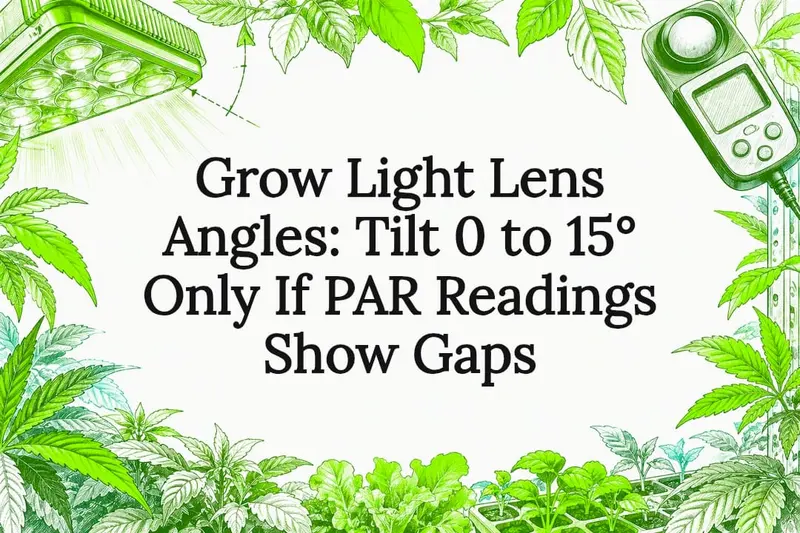
이야기를 읽어보세요Start with the fixture centered directly overhead and keep it flat. Only tilt it, and then only by 0 to 15 degrees, after a PAR meter shows uneven PPFD across the canopy. Starting heights depend on growth stage: seedlings at 18 to 24 inches, veg at 12 to 20 inches, and flower at 10 to 16 inches. Beam angle and fixture output affect these starting heights, so a quick grid reading at canopy level provides more accurate guidance than any rule of thu
이야기를 읽어보세요Spider plants are among the most popular and forgiving houseplants you can grow. With their gracefully arching leaves and easy-going nature, they've earned a reputation as the plant for beginners. But even these adaptable beauties need proper lighting to truly flourish.
이야기를 읽어보세요Mint (Mentha species) naturally thrives in partial shade to full sun outdoors. Indoors, however, windowsill light rarely provides adequate intensity or duration—especially during winter months.
이야기를 읽어보세요Each fits a different budget size, business stage, and equipment type. Understanding which plan matches your situation preserves working capital and lets you scale without draining cash reserves.
이야기를 읽어보세요Yes, poorly designed or non-compliant grow light ballasts and LED drivers can generate radio interference. If you suspect a fixture is the source, power it down right away and watch whether the noise stops. ARRL lab measurements have found emissions 30 to 58 dB over legal limits in some units, and under FCC rules, the equipment operator is responsible for fixing it.
이야기를 읽어보세요This tool makes it easy to figure out your grow light costs. Just pick your state for an instant electricity rate or type in your own rate.
이야기를 읽어보세요Rather than copying a distance from another room or an online post, start with the exact fixture manual, the current plant stage, and observations from the actual canopy. The purpose is to make a change that can be explained, watched, and adjusted with the equipment instructions close at hand.
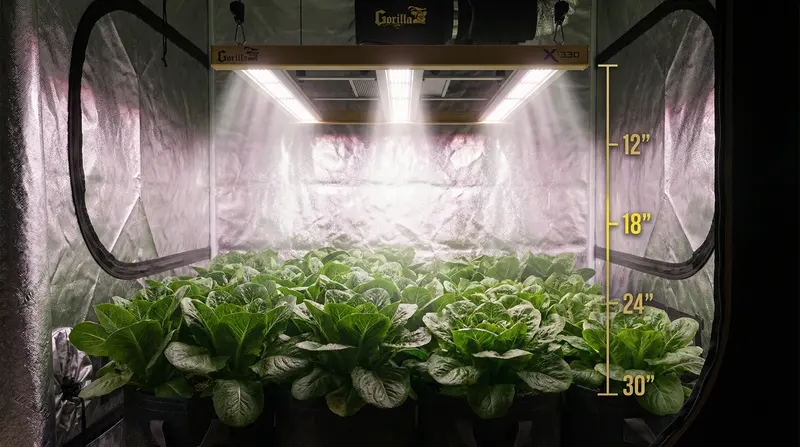
이야기를 읽어보세요Hang a full-spectrum LED grow light at 24 inches above the canopy for seedlings, 18 inches for vegetative plants, and 12–16 inches for mature flowering plants — then fine-tune based on your LED's PPF and dimmer setting. Using a dimmer lets you hang the light 4–6 inches closer without burning leaves.
이야기를 읽어보세요