Amidst the global display industry's pursuit of high color gamut, high efficiency, and low power consumption, quantum dot (QD) technology is redefining the boundaries of light. QDlux, with its core strategy of "QD light source micro-packaging," combines high-resistance water vapor packaging with micro-Chip Scale Package (CSP) technology, successfully advancing QD technology from thin films to the micro-light source packaging level. Its products have already been deployed in advertising displays, smartphones, smartwatches, and automotive displays, setting a new standard for next-generation display light source applications.
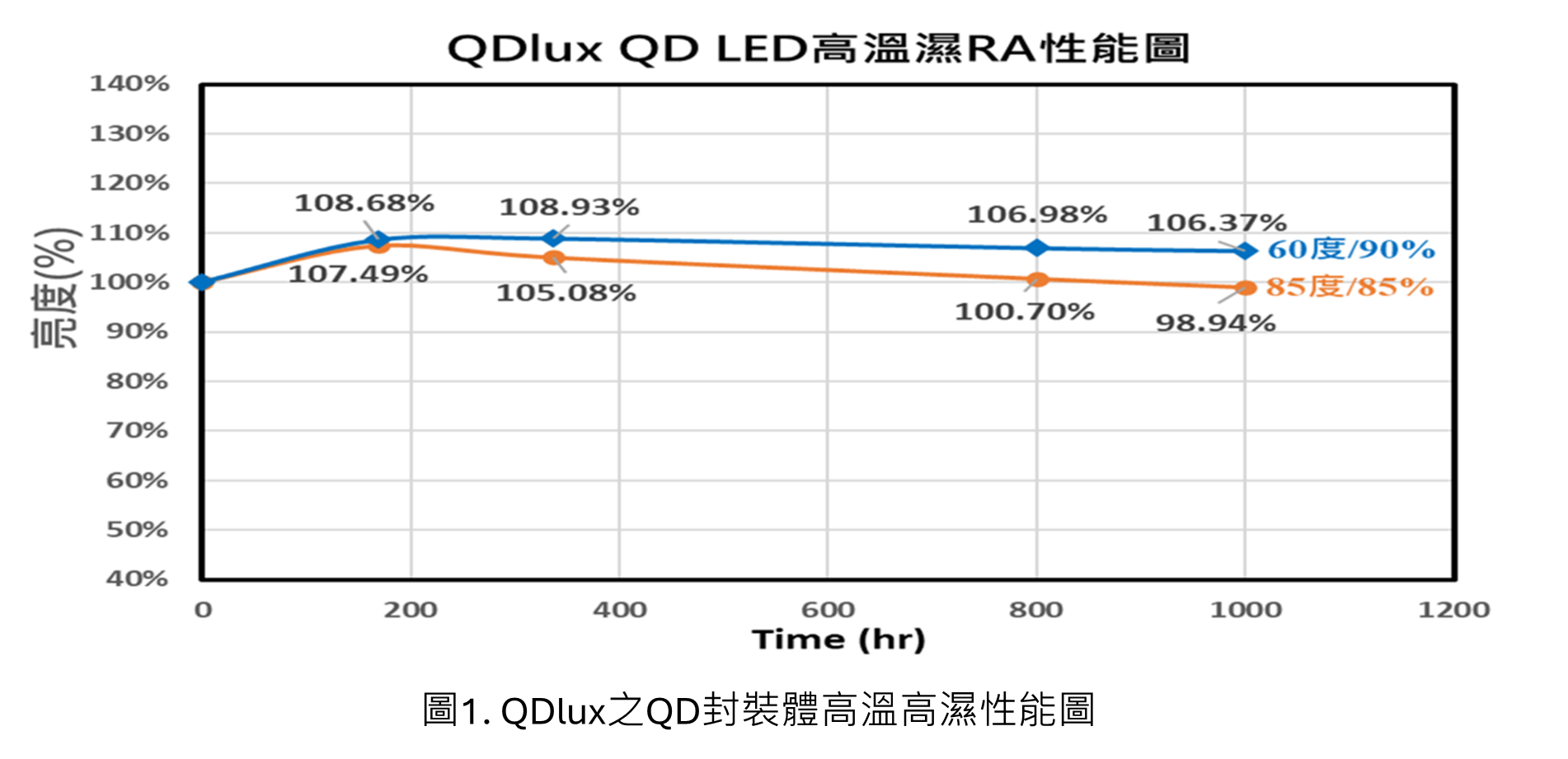
I. A Tipping Point for the Display Industry: The Technological Shift from QD Film to QD Micro-LED Packaging Over the past decade, QD Film has swept the high-end display market with its high color gamut advantage. However, due to three major challenges—complex manufacturing processes, insufficient reliability, and limited applications—it has failed to penetrate mainstream applications widely. QDlux offers a new solution with its QD micro-LED packaging technology—"fronting up" quantum dots at the LED packaging level, allowing the LED packaging structure itself to possess ultra-high color gamut color conversion capabilities. Through atomic layer deposition (ALD) technology, a multi-layered water-resistant packaging structure is constructed, significantly improving the environmental stability and luminous lifespan of quantum dots, while effectively suppressing optical loss and material degradation. Under harsh conditions such as high temperature and high humidity, QDlux's QD package successfully passed a 1,000-hour reliability verification by a well-known customer (Figure 1), demonstrating that its packaging stability has reached the industry's high standard. This achievement symbolizes a new generation milestone in the evolution of quantum dot technology from "color conversion film material" to "micro-active light source packaging."
II. World's First Miniature Five-Sided Light-Emitting QD CSP: Breakthrough in Optics and Design <br /> Traditional packaging is still limited to single-sided or top-emitting light architectures. QDlux has pioneered the world's first five-sided light-emitting QD CSP, enabling quantum dots to achieve uniform light emission from multiple sides and high luminous efficiency density within an extremely small package volume. This packaging breakthrough has the following characteristics:
- Omnidirectional light emission: The five-sided light emission design enhances the uniformity and diffusion angle of the light field.
- High packaging density: The CSP structure eliminates the need for traditional lead frames and fluorescent adhesive layers, thus increasing brightness density.
- Ultra-thin design: Especially suitable for thin and light applications such as wearable devices and in-vehicle displays.
This design not only expands optical freedom, but also symbolizes that quantum dot light sources have officially left the laboratory and are moving towards mass production applications.
III. Application Implementation: Cross-Domain Integration from Advertising Displays to In-Vehicle Displays
QDlux's miniature QD packaged modules have already entered multiple application markets:
- Digital Signage Display
For display devices that operate for extended periods, stability and color retention are crucial. QDlux's QD-packaged modules feature high brightness, wide color gamut, and long lifespan, maintaining vibrant colors even in high-temperature and high-humidity environments, making brand displays more attractive (as shown in Figure 2). - Smartphone Display
The mobile device market has extremely stringent requirements for color gamut, power consumption, and package thickness. QDlux is developing an ultra-thin QD CSP package that integrates the QD-on-Chip architecture into a miniature backlight module, achieving high color gamut, high contrast, and low power consumption screen performance. This technology is expected to allow mobile phone displays to remain highly visible in sunlight while reducing power consumption and extending battery life. - Smartwatch Display
Smartwatch screens need to balance outdoor visibility with low power consumption. QDlux's miniature QD LED light source features high saturation, low power consumption, and high contrast, ensuring clear visibility even in bright light environments while effectively extending battery life. - Automotive Display
The automotive market has extremely high requirements for brightness, reliability, and heat resistance. QDlux is currently undergoing automotive-grade verification, using QD CSP packaging combined with ALD water-blocking vapor layer protection to meet the requirements of high temperature and humidity as well as long-term durability, and is expected to become a next-generation automotive light source solution.

Figure 2. Left: ODlux advertising machine; Right: High-definition TV from a well-known brand.
IV. Industry Positioning: To be an "Invisible Driver" of the Display Industry
QDlux positions itself as a materials and module technology supplier, not an OEM manufacturer. Its R&D headquarters are located in Hsinchu, Taiwan, while its manufacturing base is in Xiamen, China, balancing technological innovation with mass production costs. This strategy allows QDlux to flexibly establish partnerships with panel manufacturers, LED packaging companies, and system integrators, entering the supply chain with modular light source solutions. Instead of competing with customers, QDlux acts as a technology driver behind industry upgrades. The table below shows the specifications of QD packages currently in mass production by QDlux.

Wu Shengxiong, General Manager of Chenliang Technology, said: Starting from the very source of quantum dots—deeply cultivating key technologies such as synthesis, modification, and coating—Chenliang Technology has successfully integrated the most competitive overall quantum dot solution on the market.
Quantum dots are a material that combines technological potential with challenges. In the past, quantum dots on the market were mostly in the form of QD films, which limited their applications. In the first quarter of 2025, Chenliang Technology broke through the technological bottleneck and successfully developed mass-producible QD LED and QD CSP light source technologies, which comprehensively surpass OLED and direct display in terms of cost performance, and show significant advantages in color gamut performance and cost structure.

Figure 3 Wu Shengxiong, General Manager of Chenliang Technology
Currently, Chenliang Technology is focusing on improving the color limits of display products. It is expected that from 2026 onwards, the company's self-developed QD LED and QD CSP backlight solutions will be widely used in various display products, providing the industry with next-generation backlight technology with a wider color gamut and better performance.
In the future, Chenliang Technology's QD technology applications will be gradually extended to fields such as display, medical and AI optical communication. With innovation as its core, it is committed to developing advanced life science applications in the field of quantum dot technology, bringing a healthier and more comfortable life experience to mankind.
V. Future Outlook: From Light Source Revolution to Industry Standards
QDlux's development roadmap showcases a clear technological path—evolving QD technology from a display auxiliary material into an active light source packaging technology. With the rapid growth of markets such as advertising displays, smartphones, smartwatches, and automotive displays, QDlux's QD LEDs and micro CSP packaging are gradually passing various verifications and entering mass production. In the future, this technology can also be extended to high-value applications such as high-end medical displays, lighting, and AI optical communication transmission, potentially becoming a benchmark for the next generation of optoelectronic display industry. Dr. Chen Jianqing, Chairman of Chenliang Technology, stated, "We hope that in the next stage of global display and optical communication technology, quantum dots will truly become a reliable, long-lasting, and industrially valuable light source technology."
Conclusion: Making Quantum Dots More Suitable for Various Display Applications <br /> From material innovation and packaging revolution to application implementation, QDlux is redefining the future of display light sources with its micro-LED packaging technology. When quantum dots are no longer limited to thin-film color conversion but move towards micro-matrix active-matrix light-emitting applications, a true revolution in display technology will begin.