The combination of AR glasses and Micro LED technology has become a hot topic in the LED industry in recent years. Thanks to the continuous advancement of Micro LED technology and the trust of terminal brand companies, the commercialization of Micro LED near-eye display technology is accelerating, moving from monochrome display to a new stage of full-color display.
On the other hand, the development of Micro OLED technology in AR glasses should not be underestimated. Despite its inherent limitations in brightness, it has been developing earlier and is more mature than Micro LED technology. Whether these two near-display technologies will coexist or replace each other in the future remains to be seen, and the choices made by AR glasses manufacturers may offer some answers.
On the evening of May 27th, Thunderbird Innovation held a new AR glasses product launch event, releasing its flagship AR glasses, the Thunderbird X3 Pro, and the new generation of pocket TVs, the Thunderbird Air 3s series, among other latest smart glasses products. Addressing different application scenarios, Thunderbird Innovation has applied Micro LED and Micro OLED technologies to the Thunderbird X3 Pro and Thunderbird Air 3s, respectively.
The Thunderbird X3 Pro features dual-lens full-color MicroLED + nano-photolithography waveguide . As Thunderbird's innovative flagship AR glasses product of the year, the Thunderbird X3 Pro has improvements in visual quality, AI experience, scene application, human-computer interaction, spatial perception, and lightweight design.

Image source: JBD
Especially in terms of visual image quality, the Thunderbird X3 Pro adopts a dual-lens full-color MicroLED + nano-etched waveguide technology solution, and applies the self-developed world's smallest 0.36cc mass-produced full-color X-cube MicroLED light engine and nano-etched RayNeo waveguide technology.
The light engine incorporates six custom high-performance RGB Micro LED microdisplays provided by JBD, enabling 16.77 million colors, an average brightness of 3,500 nits, and a peak brightness of 6,000 nits. Even in bright outdoor environments, the images in the waveguides are clearly visible. Combined with the JBD ARTCs image quality engine, the Thunderbird X3 Pro's display quality is further enhanced.

Image source: JBD
The RayNeo waveguide technology, developed through nano-photolithography, was jointly developed by the Thunderbird X3 Pro and Applied Materials. Reportedly, compared to traditional nanoimprint lithography, the waveguide developed using nano-photolithography can improve light efficiency by 50%, while also reducing the weight and thickness of the waveguide device and better suppressing rainbow effects, thus improving the final visual display effect.
Meanwhile, the Thunderbird X3 Pro also incorporates a new secondary pupil expansion technology, which can achieve a transparent display effect equivalent to a 43-inch screen through precise light path control.
With the support of the latest near-eye display technology, the Thunderbird X3 Pro can display more AI functions. By incorporating a customized multimodal AI model to support visual Live AI interaction, and the spatial perception capabilities of the dual-camera system, the Thunderbird X3 Pro can achieve functions such as object recognition, AR real-scene navigation, and real-time translation. This AI information can be clearly displayed on the glasses.
The Thunderbird X3 Pro also features a built-in Android virtual machine with automatic rendering, resolution adaptation, and display optimization, further enhancing the display effect and fully leveraging the capabilities of the Thunderbird X3 Pro's latest near-eye display system.
Furthermore, despite the improved display technology, the weight of the Thunderbird X3 Pro has not been significantly affected. Thanks to its unibody design, the glasses weigh only 76g.
Currently, the Thunderbird X3 Pro is available for pre-order. The standard version is priced at 8,999 yuan, with a national subsidy price of 7,649.15 yuan; the fully fitted myopia version is priced at 10,999 yuan, with a national subsidy price of 9,349.15 yuan.
The Thunderbird Air 3s series features Micro OLED technology, using Apple's proprietary dual-layer OLED technology . In addition to its flagship product, the Thunderbird X3 Pro, Thunderbird Innovation also released the Thunderbird Air 3s and Air 3s Pro AR glasses, priced at 1499 yuan and 1599 yuan respectively, significantly cheaper than the Thunderbird X3 Pro.
According to the promotional materials, this series of glasses is mainly designed for indoor use, is compatible with over 1000 devices, and comes bundled with an HDMI adapter for independent power supply, making it easy for users to connect the AR glasses to various host devices.

Thunderbird Air 3s series (Image source: Thunderbird Innovation)
In terms of near-eye display technology, the Air 3s series all adopt the Peacock Optical Engine 2.0, which is equipped with a Micro OLED + Birdbath near-eye display technology solution.
The screen uses a 5.5-generation Micro OLED lens provided by Vishy Technology, and adopts the same dual-layer OLED technology as Apple's iPad Pro. The maximum resolution can reach 4K, the maximum refresh rate can reach 120Hz, the contrast ratio can reach 200,000:1, and it covers 145% of sRGB and displays 16.7 million colors.
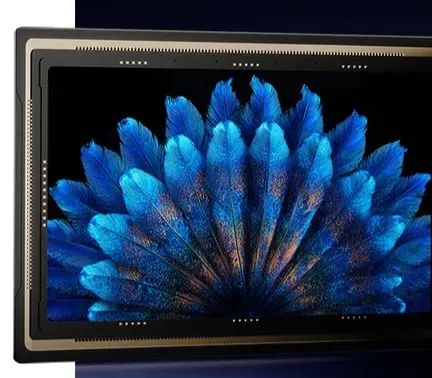
Peacock Optical Engine 2.0 (Image source: Thunderbird Innovation)
By incorporating BirdBath optical technology, the Air 3s series boasts 1200 nits of eye-level brightness and 20 levels of brightness adjustment, achieving the equivalent display effect of a 135-inch screen at a distance of 4 meters.
Micro LED and Micro OLED technologies: replacement or coexistence?
Judging from Thunderbird's innovative new products, Thunderbird has a relatively clear approach to the application of Micro LED and Micro OLED technologies. The Thunderbird X3 Pro is positioned at a higher end and needs to withstand complex outdoor applications; therefore, Thunderbird chose Micro LED, leveraging its high brightness to avoid the impact of sunlight and other factors on the display effect, ensuring clear image transmission.
The Air 3s series of AR glasses, which prioritizes a high-quality display experience, will utilize Micro OLED technology, which currently offers superior display performance.
Thunderbird Innovations' choice of near-eye display technology may also be the mainstream strategy for the application of near-eye display technology in the current AR glasses industry.
Based on the Micro LED AR glasses products compiled, most of these products focus on outdoor scenarios. For example, the Thunderbird X3 Pro, Thunderbird X2 Lite, and Meizu MYVU Discovery primarily provide users with text and image content such as translation, navigation, and information reminders, thus placing greater emphasis on the clarity of information display.
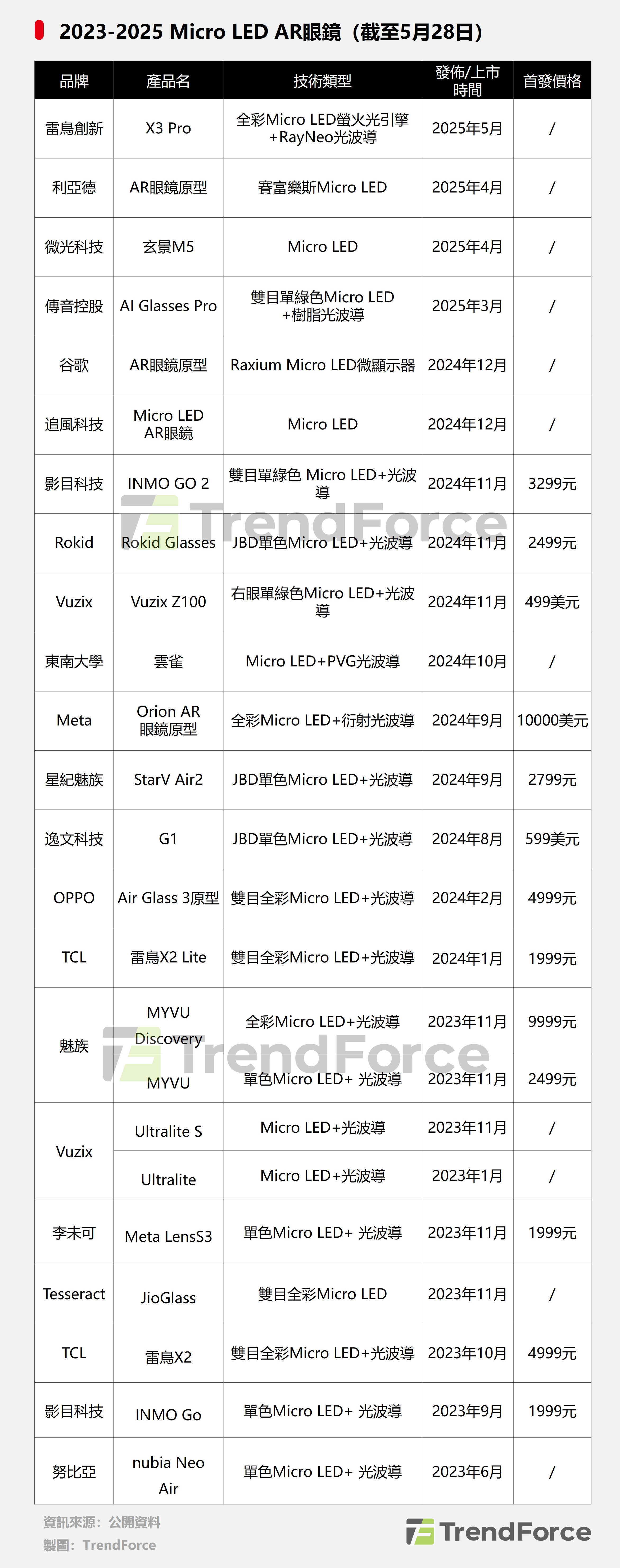
Micro OLED is better suited for AR glasses products with a focus on entertainment. For example, Thunderbird's Air 3s series, Air 3 series, Air 2s series, as well as AR glasses such as XREAL One, StarV View, and VITURE Pro, are all designed for portable entertainment, supporting access to multiple devices and allowing users to play games and watch movies. Therefore, these products have chosen Micro OLED for its superior display effect.

Currently, Micro LED is more suitable for AR glasses that emphasize high brightness for outdoor applications, while Micro OLED is suitable for products that emphasize color display. The two technologies seem to have found their own way of survival in the AR glasses field, but this situation may change in the future.
With future optimizations in full-color technology and cost, Micro LED technology may also enter the AR glasses product category with high display requirements, competing with Micro OLED technology and expanding its penetration rate in AR glasses.
It is estimated that Micro OLED will account for 53% of the AR device market in 2024. However, due to the limitations of this technology in balancing brightness and color display, the market share of Micro OLED in AR will gradually shrink as Micro LED technology develops.
It is estimated that by 2030, Micro OLED's market share in the AR market will decline to 22%, while Micro LED (LEDoS)'s market share is expected to increase to 67%.