On December 4th, AUO (Austria Optoelectronics Corporation) held the "Intelligent Driving the Future, Shared Growth: AUO Smart Exhibition 2025" at its Suzhou plant, showcasing its achievements in intelligent manufacturing upgrades, green transformation, and industry co-creation driven by artificial intelligence. Against the backdrop of the current trend of accelerated digital transformation and green sustainable development in the display industry, AUO's transformation achievements have attracted widespread attention within the industry.
The proportion of display business will gradually shrink to less than 50% . With the changes in the global semiconductor display technology landscape and market competition, as well as the transformation of the supply chain and value chain of industries such as automobiles, global panel manufacturers have successively adjusted their development strategies, embarking on a path of differentiated transformation through horizontal expansion or vertical extension, and broadening the company's profit growth points.
Taking AUO as an example, it has internally adjusted and optimized its product structure, and externally acquired automotive parts manufacturers to expand its business scope, gradually forming a complete industrial layout based on three pillars: "Display Technology, Mobility Solutions, and Vertical Solutions," transforming from a single display panel manufacturer into a vertically integrated solutions provider. Currently, AUO has also incubated three companies: AUO Display+, AUO Mobility Solutions Corporation (AMSC), and ADTTech, focusing on different areas to drive strategic development.
Among them, display technology serves as the cornerstone, encompassing LCD and Micro/Mini LED technologies, primarily providing high-value, systematic display solutions through Micro/Mini LED technology.
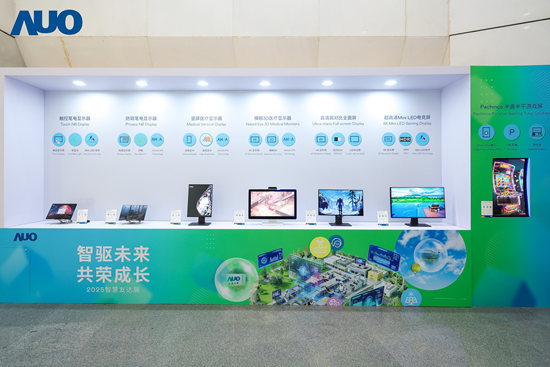
On the day of the Smart AUO exhibition, AUO Suzhou showcased its latest display product matrix using LTPS/Mini LED backlighting/Micro LED technologies, including touch laptop monitors, privacy laptop monitors, vertical screen medical monitors, naked-eye 3D medical monitors, high-definition high-contrast full-screen displays, ultra-high-definition Mini LED gaming screens, customized semi-curved and semi-flat gaming screens, wood grain automotive displays, Micro LED smartwatches, Micro LED smart cockpits, and Micro LED transparent displays, among other innovative products.
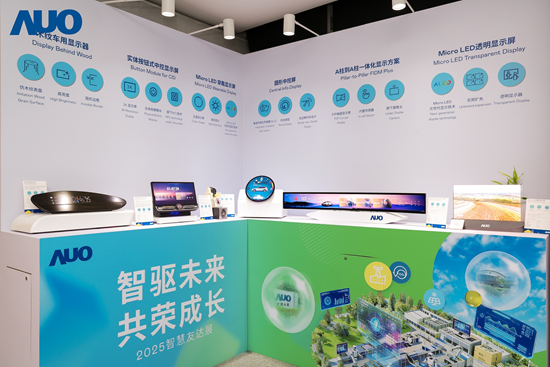
The intelligent mobility business primarily revolves around in-vehicle components, encompassing human-machine interfaces, control panels, air conditioning control systems, and smart cockpits. Currently, intelligent mobility has become a significant growth engine for AUO, with revenue projected to increase by 20% year-on-year in 2024. Furthermore, due to the acquisition of German automotive parts manufacturer BHTC, in-vehicle revenue is expected to achieve double-digit growth in 2024, with relatively high order visibility. According to the company, customer demand is currently robust, and new projects continue to be launched. To address this, AUO has expanded production in Bulgaria and Mexico, leading to a more optimistic revenue outlook for the in-vehicle business unit, with revenue projected to maintain double-digit compound annual growth next year.
AUO's vertical field business centers on display technology, providing highly customized, comprehensive display solutions based on customer needs. These solutions encompass design, R&D, production, and hardware/software integration, expanding into diverse scenarios such as smart healthcare, smart education, enterprise, transportation, industry, smart retail, and entertainment. Recently, AUO's Micro LED transparent display products have been deployed in various fields including smart retail, transportation, and healthcare. Furthermore, AUO is focusing on developing green solutions by integrating smart manufacturing and energy solutions.
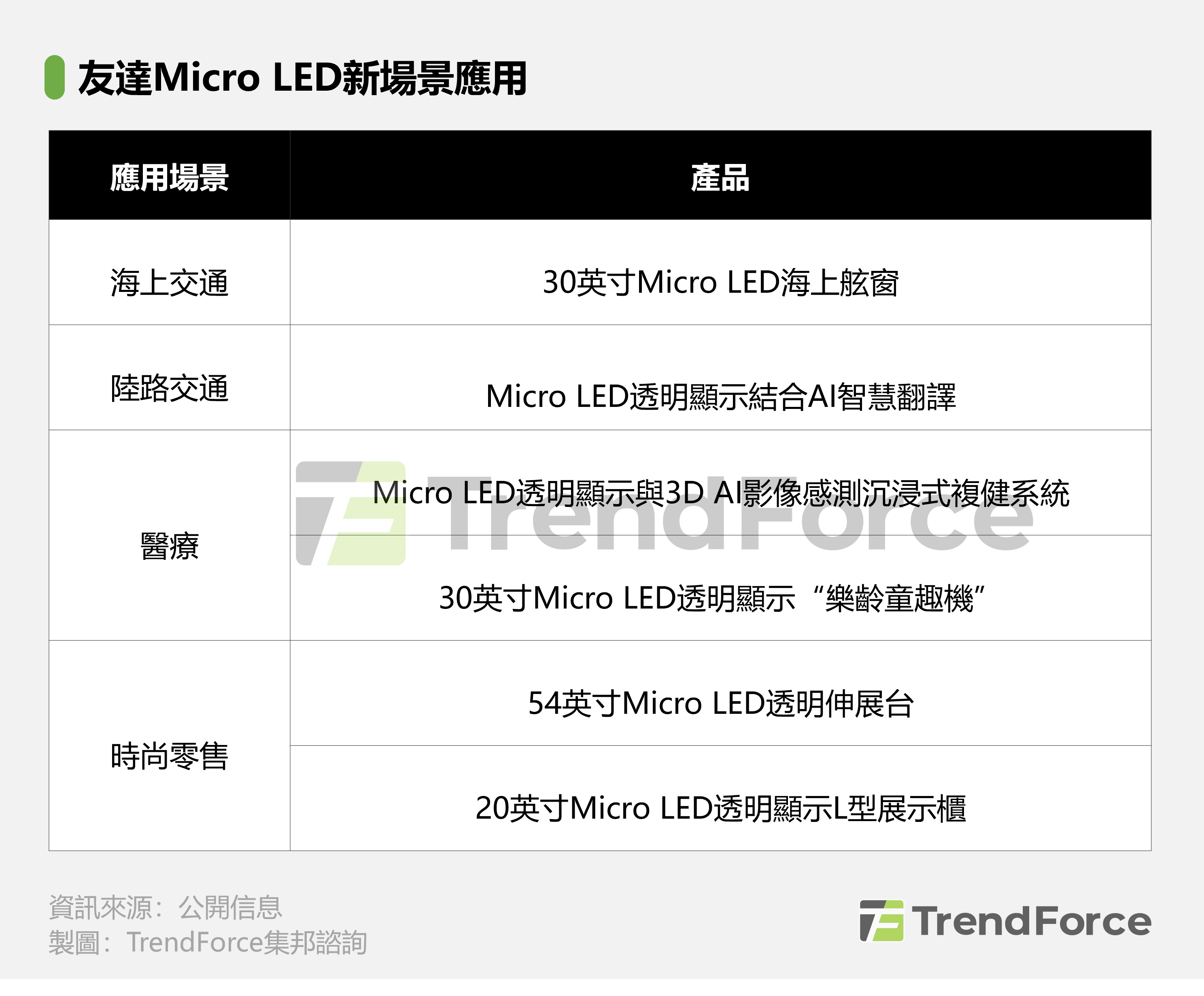
Previously, AUO General Manager Ko Fu-jen revealed that in 2024, the display panel business accounted for 55% of total revenue. AUO expects the proportion of panel revenue to drop below 50% in 2-3 years, and AUO is currently making good progress towards this goal. According to the latest information, as of the third quarter of this year, the combined revenue share of AUO's smart mobility and vertical fields has reached 44%, with a target of exceeding 50% by 2027.
Micro LED costs are halving every two years . Currently, the global display market is in a new phase of technological innovation, and the new competitive landscape is yet to be determined. Panel manufacturers such as Samsung Display, LG Display, TCL CSOT, and BOE are flocking to the OLED track, while AUO is choosing to leverage its strengths and avoid its weaknesses, deeply exploring the business opportunities of Micro LED display technology in niche markets such as automotive, medical, and industrial control, thus forming a differentiated competitive advantage.
AUO's strengths lie in two aspects:
At the macro level, Taiwanese manufacturers possess strong capabilities in the global semiconductor manufacturing field and have accumulated rich experience and technological foundation in precision engineering and automation equipment as well as the existing LCD panel industry. These have strong commonalities with the manufacturing process of Micro LED, which means that AUO has an existing advantage in developing Micro LED technology.
At the micro level, AU Optronics and its investee company PlayNitride are among the few manufacturers that have already mass-produced Micro LEDs, giving them a first-mover advantage in the Micro LED field. Examples include the AFEELA 1, the first model of the intelligent connected electric vehicle brand jointly launched by Sony and Honda, and the Garmin Micro LED smartwatch.
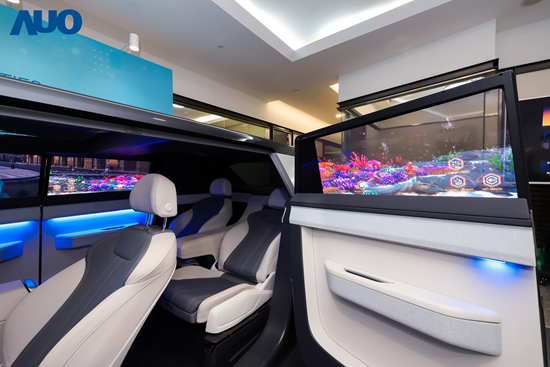
The AFEELA 1 is the world's first vehicle to feature a Micro LED front-end display solution, with a starting price of $89,900. AU Optronics Chairman Peng Shuanglang revealed during a media exchange that the AFEELA 1 is expected to launch in the US in the second quarter of next year, earlier than anticipated. While AU Optronics did not showcase the AFEELA 1 at the Smart China Expo, all the displays in the smart cockpit on display were based on Micro LED technology, from the external interactive displays to the internal central control screen, panoramic sunroof, and transparent window displays, creating a highly immersive third living space within the vehicle.
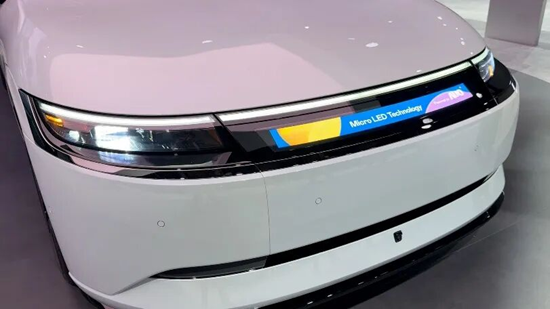
AFEELA 1
The launch of Garmin's Micro LED smartwatch signifies that Micro LED technology has achieved commercial mass production capability, and also demonstrates AUO's technological strength as the display panel supplier for the watch (backplane, mass transfer, and backplane molding). However, despite this, the high cost of Micro LED remains a significant concern. Research indicates that the cost of Micro LED chips currently accounts for as much as 85% of the watch's cost.
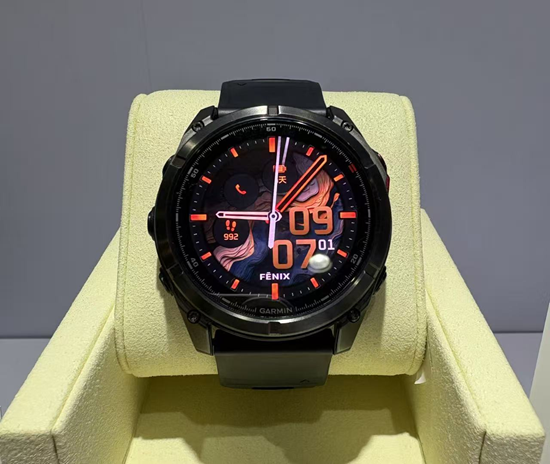
Garmin smartwatch
However, AUO is very confident in its cost reduction efforts. "The cost of Micro LED will decrease by 50% every two years in the future," Peng Shuanglang said.
Further investigation reveals that AUO is achieving cost reduction primarily through two dimensions: Firstly, the next step is expected to shrink the chip size to 10μm x 10μm, while the current chip size used in smartwatches is 20μm x 40μm, meaning further cost reduction; secondly, the mass transfer process combined with AI technology results in higher mixing uniformity, simultaneously improving process yield and utilization, thus naturally leading to cost reduction. Furthermore, regarding the power consumption challenge, AUO expects to reduce it by 50% over the next three years, effectively balancing product performance and battery life.
Facing increasingly fierce competition in the automotive market, AUO has also demonstrated its strong confidence.
From AUO's perspective, the automotive display market exhibits two major trends: first, the localization of the supply chain due to increasingly complex geopolitical relationships; and second, the technological trend of combining displays with physical knobs due to security considerations. In this regard, AUO's acquisition of the German automotive parts manufacturer BHTC is a natural move in line with these trends.
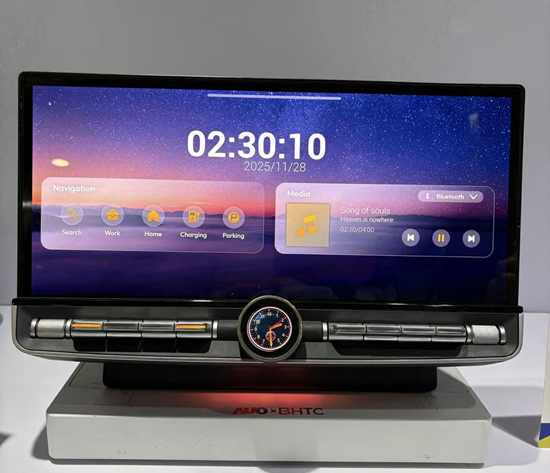
Physical button-type central control display screen
Peng Shuanglang stated that, leveraging BHTC's customer base and channel resources in the European and American markets, AUO can better serve European and American automakers. At the same time, AUO has established manufacturing and service locations in Japan, South Korea, mainland China, India, Europe, and North America, forming a complete supply chain and innovation ecosystem through strategic cooperation and mergers and acquisitions.
In response to new technological trends, AUO's expertise in panel displays and BHTC's position in components such as knobs will perfectly align with the new demands of future smart cars for display technology.
According to Peng Shuanglang's latest revelation, AUO's automotive business currently accounts for approximately 27-28% of its total revenue, and is expected to exceed 40% in the next three years. Over the past three years, AUO and BHTC have jointly secured orders from automakers totaling over US$15 billion, which will gradually materialize in the next two to three years, potentially driving the automotive business to achieve a double-digit compound annual growth rate.
Overall, AUO's expansion from Tier-2 to Tier-1 in the automotive industry has created strong synergistic advantages, and it is expected to maintain its leading position among the top two in the global automotive display market.
AI-driven intelligent manufacturing is already the next level.
From the perspective of the company as a whole, in addition to its own technological strength and gradually improving vertical integration capabilities, AUO also has a relative first-mover advantage in smart manufacturing, which further strengthens AUO's overall competitiveness.
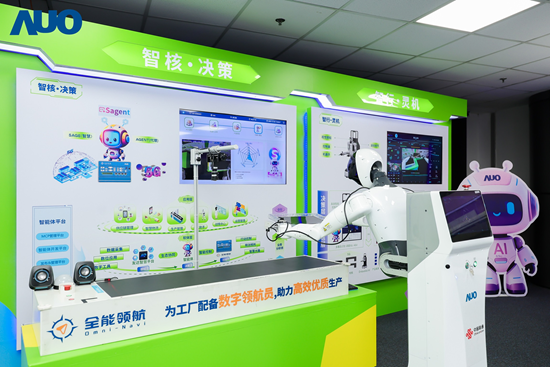
Taking AU Optronics Suzhou as an example, since launching its digital transformation in 2017, AU Optronics Suzhou has invested nearly 1 billion yuan in the transformation and upgrading of its production lines. In the field of smart manufacturing, AU Optronics Suzhou has focused on two major initiatives: the deep application of "intelligent agents" in industrial scenarios and the innovative integration of "embodied intelligence" in production scenarios. These initiatives have enabled the company to comprehensively upgrade its production and management processes, build a full-chain smart manufacturing system, and construct a flexible autonomous factory.
In the current exploration of smart manufacturing in the industry, AUO's AI agents have evolved from passive response to proactive decision-making, assisting factories in automatically generating reports, optimizing scheduling, maintaining equipment, and monitoring quality. Embodied intelligence, on the other hand, uses a three-dimensional perception field of points, lines, and surfaces to introduce various automated equipment, enabling comprehensive data collection and automated flow in the production scenario.
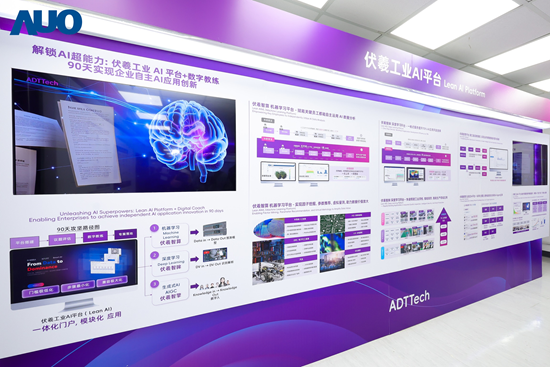
Based on this series of intelligent upgrades, AUO Suzhou has achieved a 95% equipment connectivity rate, a 90% data cloud coverage rate, more than 230 self-developed AI models, a 10% increase in production efficiency, a 90% increase in factory utilization, and a 100% 5G network coverage rate in the factory area. These achievements have also provided some reference for the industry.
Furthermore, at the "2025 ESG Co-prosperity Conference" held recently at its Xiamen plant, AUO released its "Collaborative Deepening of Sustainable Management" strategy and shared its energy-saving and carbon-reduction achievements and the benefits of digital and intelligent applications. At a time when the industry is increasingly focused on ESG, AUO demonstrates its determination to build a green and resilient industrial ecosystem. Its achievements in digitalization and green development have received numerous national-level recognitions, such as passing the Level 4 Smart Manufacturing Maturity Assessment and obtaining national-level green factory certification. In the future, AUO will be driven by innovative processes, AI technology, and the circular economy to build a benchmark for green operations and promote collaborative prosperity within the industry. (Text: Janice)