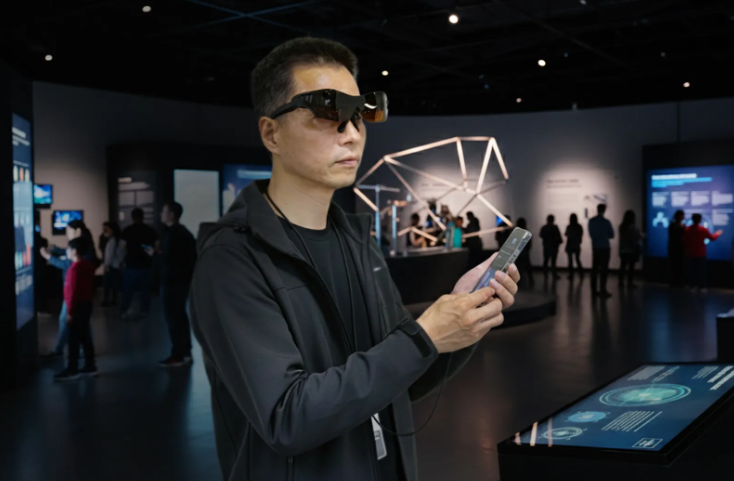
On the first day of the seminar on the new display industry, experts in the LED and display fields shared their insights on micro-display and small-to-medium-sized display technologies. On the second day, the conference shifted its focus to ultra-large-size and ultra-high-definition (dual-ultra) display technologies. Twelve industry experts and senior analysts gathered to conduct in-depth discussions on topics related to the ultra-large-size and ultra-high-definition industry.
Technological Evolution and Application Innovation of Micro LED Displays (by Qiu Yubin, Senior Research Vice President, TrendForce)

After moving from laboratory technology to commercialization, the current development focus of Micro LED display technology is more on specific goals such as optimizing design and manufacturing, finding niche markets, developing new applications, and expanding market size.
For large displays, increasing the back panel size to reduce the need for additional processes such as splicing and side wiring is another option for cost reduction and improving overall production yield. While wearable applications currently lack mainstream brands to drive growth, Micro LED, as the only display technology that can be highly integrated with sensing components, still possesses unique advantages. Automotive applications and near-eye displays are the next application tracks targeted by glass-based and silicon-based Micro LEDs. The former is expected to contribute over US$100 million in chip production value by 2028, while the latter is projected to achieve a 50% penetration rate in all AR glasses in the medium to long term.
In summary, leveraging the unique advantages of Micro LED displays, such as flexibility, transparency, and invisibility, to find niche applications is essential to creating a technology that differentiates itself from mainstream solutions. In addition, Micro LED applications are gradually expanding into non-display fields such as optical communication, biomedicine, and industrial production, representing another important avenue for increasing market scale and diversifying applications.
Envisioning the Future: The Development of New Display Technologies (by Fu Yaosheng, Dean of Guoxian Technology Research Institute)

As automobiles evolve into a human-centered "third living space," the interaction between cars and drivers is gradually expanding to include intelligent driving and entertainment information. The intelligent upgrade of the cockpit is driving screen innovation. Guoxian Technology, with its core high-brightness Mini LED technology, has developed a variety of new display technology applications, including HUD PGU, air imaging, light field screens, and wood grain screens.
HUD technology, as an important means of displaying driving information, has evolved from the traditional C-HUD to W-HUD and is gradually moving towards AR-HUD. High-brightness Mini LED backlight technology can effectively solve the shortcomings of existing TFTs in AR-HUD PGUs. Based on this, Guoxian Technology has developed HUD PGU solutions as well as primary and secondary mirror solutions.
Atmospheric imaging technology is widely used in information security, medical displays, and smart automotive applications. Guoxian Technology provides high-brightness Local Dimming Mini LED backlit LCD modules, paired with high-resolution negative refractive glass, to achieve precise spatial imaging. The imaging angle can be adjusted according to needs, making it suitable for automotive displays, smart homes, education, and high-end consumer products.
Light field screen technology breaks through the limitations of in-vehicle physical space and can be widely used in cockpit holographic entertainment screens, vision protection learning machines (Magic Vision Full Vision), and consumer-grade large-screen displays. Intelligent wood grain surface display technology integrates with the luxurious atmosphere design of automotive interiors, upgrading wood grain trim from a simple decorative element into an innovative application with both intelligent display and control functions.
Founded in 2006, Guoxian Technology became a subsidiary of Kaisheng Technology Co., Ltd., a listed company under the state-owned enterprise China National Building Materials Group, through a merger and reorganization in 2015. It is an innovative technology company providing display solutions and services both domestically and globally. Currently, the company has intelligent manufacturing bases in Shenzhen, Bengbu, and Nanjing.
Applications and Future Trends of LED Display and Control Systems (by Lin Xianmeng, Director of the Laboratory at Academia Sinica, Nova Nebula)

The continued penetration of MLED technology in applications such as xR virtual photography, cinema screens, automotive displays, and televisions is driving the continuous upgrading of users' new display experiences. In this process, the display control system has become an amplifier of the new display value.
Based on years of deep expertise in the field of display control systems, NovaNebula has developed a series of advanced display control system technologies, including ultra-large load capacity controllers, multi-backup technology, fault monitoring and early warning technology, display and imaging system synchronization technology, high-definition and color perception processing technology, and rapid screen configuration and scene switching technology. With these technologies, NovaNebula has successfully assisted in the creation of several landmark projects.
Currently, Nova Nebula is fully focused on five key display technologies—grayscale resolution, temporal resolution, spatial resolution, dynamic range, and color gamut—as well as smart display technologies, committed to driving continuous improvement in display performance through technological innovation. The company is constantly developing new technologies to further enhance the overall value of its displays, laying a solid foundation for the accelerated arrival of the MLED era.
Progress in the commercialization of TFT-based Micro-LED splicing screens Cao Xuanchen, Deputy General Manager & CTO of Xian Optoelectronics

The market prospects for large-size display products remain promising, with widespread applications in command and dispatch, conference training, advertising, and other scenarios. However, existing large-size (>120") display technologies suffer from three major drawbacks: low image quality, visible seams, and poor eye protection. TFT-based Micro LED displays offer unique advantages in large-size display applications, providing superior image quality and a cinematic viewing experience; seamless splicing; and greater eye comfort, protecting user health.
However, in the manufacturing process of TFT-based Micro LED splicing displays, the performance of LED chips, the array characteristics of mass transfer technology, and the fragile substrate have a certain impact on the overall performance of the product. Mass production faces four major challenges: poor uniformity, frequent dead pixels, visible seams, and screen splitting at different viewing angles.
Chenxian Optoelectronics ensures pixel-level image quality uniformity through its world-first Bin+Demura hybrid solution; its efficient multi-repair technology guarantees zero screen defects; its integrated splicing solution achieves seamless splicing, resulting in near-perfect visual fusion; and its Micro-Lens structural design reshapes the emission angle, ensuring image consistency across wide viewing angles. With these technological challenges overcome, Chenxian Optoelectronics will next focus on cost reduction through supply chain collaboration, driving the market adoption of high-quality, affordable TFT-based Micro LED splicing display products.
Established on August 4, 2020, Chenxian Optoelectronics, originating from Visionox, is the first high-tech enterprise in mainland China focusing on the independent research, development, production, and sales of Micro LEDs, aiming to become a leader in TFT-based Micro-LEDs. The company owns two smart factories: a VSD pilot line for technology research and development and testing, and a VSM mass production line for large-scale production.
The New Future of LED Display Chips: BOE Huacan Optoelectronics Direct Display Sales Manager

Mini LED and Micro LED, as next-generation display technologies, have enabled LED displays to outperform traditional LCD technology in terms of display effect, power consumption, and lifespan. Simultaneously, driven by policy support and market demand, the innovation and application of LED display technology have developed rapidly, with its application scenarios expanding from traditional fields to emerging areas, such as LED all-in-one machines, virtual photography, and cinemas.
LED display technology is shifting from "point light source" to "area light source," driving the application of COB and MIP technologies in the small-pitch and micro-pitch markets. The Mini LED market will continue to expand, especially in the fields of high-resolution, small-pitch, and ultra-high-definition displays. Meanwhile, Micro LED technology, hailed as the "ultimate display solution," will play an increasingly important role in various fields such as large indoor displays, HUDs, matrix headlights, smartwatches, AR/VR glasses, and televisions.
In terms of LED display chip solutions, BOE's HC SemiTek has launched the Human Centric True Colour (HC True Colour series), designed specifically for high color gamut and HDR content creation, aiming to pursue and restore the realism of image display colors and improve the terminal display effect. The F07E-BE is the first product in this series, featuring high color gamut, high image quality, high quality, and low power consumption.
Furthermore, the Micro Pixel Device (MPD) platform, as a new generation of display technology, comprehensively improves display performance and ease of use. The MU300 and MU200 are currently the best implementation solutions in the micro-pitch field and are among the flagship products of the HC True Colour series. Hailed as the "ultimate display technology," Micro MPD boasts advantages such as ultra-high contrast, optimal white balance viewing angle, improved die bonding efficiency and yield, and suitability for micro-pitch applications. Currently, the HC True Colour series is still under continuous development.
BOE's technological advantages and resource integration are continuously strengthening, especially in its strategic layout in the Micro LED field. BOE's Micro LED wafer manufacturing and packaging testing base in Zhuhai is the world's first 6-inch mass production line, and will become a leading global R&D and production base, further promoting the large-scale application of Micro LED technology and contributing to the rapid development of the industry.
Mini LED TV Development Direction: Industrialization and Commercialization (Liao Yansuo, Product Director, Zhaochi Guangyuan)
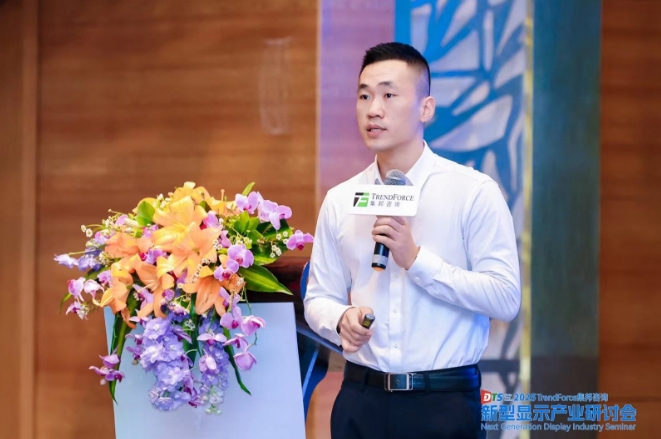
The shipment volume of Mini LED backlit products in the TV market has been increasing year by year, especially in the high-end market. With its advantages such as high contrast, high brightness, and low power consumption, it is gradually becoming a strong competitor to OLED. In the future, Mini LED technology will gradually penetrate into the mid-to-low-end market through technological innovation and cost optimization, meeting the needs of more consumers.
MTC Optoelectronics has proposed three major market strategies: in the high-end market, it focuses on high-quality products with more than 3,000 zones; in the mid-range market, it focuses on high-performance products with 500-2,000 zones, lowering the entry threshold and promoting the popularization of Mini LED technology; and in the cost-effective market, it focuses on 100-500 zones to meet the dual needs of mass consumers in terms of cost and performance.
In terms of industrialization and commercialization, the lower-tier market needs to lower the consumption threshold, improve the cost-effectiveness advantage to gain sales, and then win the future with scale advantage. Specific measures include: (1) In LED design, reduce costs by increasing chip area, increasing power, reducing the number of chips and increasing chip spacing; (2) Secondary optical design needs to be matched with large-angle chips and adjust the OP value according to the light output angle; (3) PCB board costs are reduced by optimizing area, improving single board utilization and reducing precision requirements; (4) Driver chips are developed towards high voltage, high current and multi-channel to meet the performance requirements of Mini LED TVs.
In the MiniLED backlighting field, MTC Optoelectronics possesses a vertically integrated advantage. Its upstream supplier, MTC Semiconductor, has achieved a monthly production and sales volume of 1.1 million 4-inch wafers, greatly supporting MTC Optoelectronics' market expansion. Currently, MTC Optoelectronics has 100 SMT production lines in MiniLED, placing it in a leading position in the industry; its product portfolio includes standard-mount products, flip-chip products, and Mini LED products (lens-less).
The Development Trend of MLED Direct Display Large Screens from Technology to Applications (Lu Zhenghua, Deputy General Manager of Skyworth Commercial)

The development trend of MLED direct-display large screens is mainly reflected in LED modules, display panels, and complete systems. Regarding LED modules, Skyworth Commercial has launched the Black Domain S series SCOB packaging technology and a 4-in-1 aluminum alloy bracket to improve panel consistency, contrast, refresh rate, and optimize energy consumption. The development trend of complete systems is towards de-engineering, standardization, intelligence, and integration.
In terms of audiovisual perception, the development trend of MLED direct-view large screens can be summarized as "good-looking, good-sounding, and easy to use." Good-looking: Hardware and calibration ensure basic display capabilities, while Skyworth's AI picture quality engine enhances picture quality through full-frame, full-scene detection. Good-sounding: The Tianlai panoramic sound system features built-in dual-frequency high-fidelity speakers with an independent cavity design, ensuring clear and realistic sound quality. Easy to use: It boasts features such as a versatile desktop and multimodal interaction, while also developing the Coocaa AI intelligent agent to achieve various AI functions through voice control.
In terms of application scenarios, MLED direct-view large screens are gradually expanding into diverse fields such as office meetings, exhibitions, and audio-visual entertainment. In office meeting scenarios, Skyworth Commercial enhances meeting efficiency through wireless screen projection and touch annotation functions. In exhibition scenarios, the Xiaowei broadcast control system connects display devices, making content interaction on the MLED large screen more convenient and delivering an immersive intelligent experience. In audio-visual entertainment scenarios, large-screen games, karaoke parties, and movie viewing functions, combined with controller and speaker linkage, meet home entertainment needs.
Display color calibration unlocks the secrets to a visual feast. Ruan Shi'an, Director of the MLED Vision and Image Research Center.

MLED screens suffer from various color issues in practical applications, including inconsistencies in brightness and color, low-gray speckles and IC color blocks, regional color shifts caused by cold or hot screen conditions, temperature drift, gray skipping and color shifts, nonlinear photoelectric response characteristics, difficulties in manufacturing quality control, and challenges in controlling ink color consistency. These problems affect the visual effect of the display, especially in demanding application scenarios.
To address these issues, Carlette introduced the MLED color calibration solution. At its core is the scientific-grade calibration system CCM6000, which includes a scientific-grade calibration camera and the professional calibration software Calibration Pro. Equipped with a 16-bit high-precision image sensor and a constant-temperature cooling system, the CCM6000 achieves high-precision calibration of ±1% for brightness and ±0.003 for chromaticity, supports full grayscale correction, and can complete 4K calibration within 8 minutes, significantly improving calibration efficiency.
In terms of equipment, Carlet has launched the Mica310 production line automation calibration equipment and the Mica310B ink color sorting equipment. The Mica310 features high precision, fast calibration and good compatibility, enabling end-to-end management from production to the field; the Mica310B supports ink color sorting for PCB and MLED finished light boards, with a capacity of up to 220 PCS/H.
Currently, MLED calibration technology has been widely used in field calibration, factory enclosure calibration, and module automation production lines.
Digital Cinema LED Projection Technology and Market Outlook (Dong Zhigang, General Manager of Cinema Business Unit, Unilumin Group)
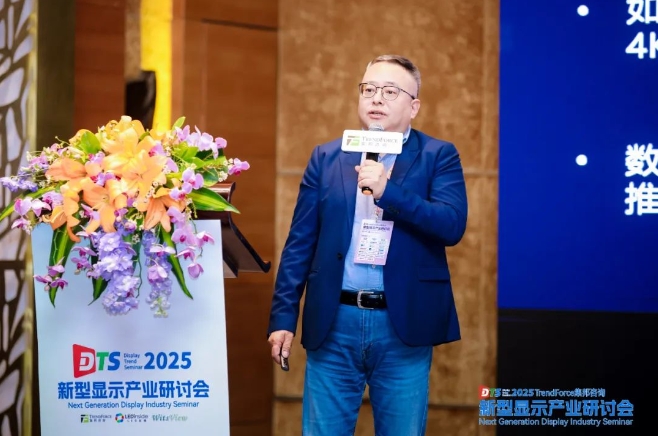
To achieve high technical specifications, a digital cinema LED projection system must not only possess the high display performance and hardware security of the LED display screen itself and complete full-screen color management, but also cooperate with a digital cinema playback server (IMB) to achieve real-time decoding and playback of digital cinema data packets (DCP), thereby completing high-speed data transmission.
Digital cinema LED projection systems are used in LED cinemas, acoustically transparent LED cinemas, immersive cinemas, dome cinemas, AI-powered cinemas, e-sports cinemas, and more. Unilumin Technology has provided related products to cinemas in Beijing, Xinjiang, Chengdu, Wuhan, Zhejiang, and the United States, and launched the world's first 20-meter 4K acoustically transparent cinema screen, which is used in Nanjing Deji Plaza Cinema.
In the field of digital cinema LED projection sound reproduction technology, due to the structural characteristics of LED screens, it is impossible to install the main speakers behind the screen as in traditional cinemas. Therefore, special sound reproduction technologies are needed to solve the problems of sound image deviation and sound quality. The main technical means include sound image and wave field synthesis methods, sound wave reflection methods, and screen sound transmission methods. Among these, the design of sound-transparent LED screens is crucial, and specific solutions include partial opening sound transmission schemes and full-screen opening sound transmission schemes.
With the continuous upgrading of the DCI standard, LED projection systems are developing towards higher resolution and higher dynamic range. Technological innovation focuses on optimizing sound transmission apertures and intelligent system management, and the color gamut is expected to expand to BT-2020 in the future, supporting higher color depth. Supported by national policies, the future development prospects of the LED cinema screen market are very broad.
Cost pressures and technological innovation: the do-or-die path to expand the medium and large-size OLED market. (Zhou Shibao, Research Manager, TrendForce)

Starting in the second half of 2026, two 8.6-generation RGB OLED factories will gradually begin mass production. Panel manufacturers are increasing capacity and optimizing production processes by building higher-generation production lines, thereby reducing unit costs. After 2027, with the further increase in IT OLED panel production capacity, Apple's MacBook will become a key factor driving the growth of the OLED laptop market. As a leading global brand, Apple's large-scale adoption of OLED panels will have a profound impact on the entire market.
Global LED Display Market Trends Outlook - Yu Bin, Research Manager

Data shows that, from a market perspective, while domestic LED display market demand was moderate in 2024, overseas markets continued to grow. From a technological perspective, COB technology continued its rapid growth, and MiP technology also attracted significant attention; competition between the two technologies is expected to be a long-term trend. This competition between COB and MiP is likely to accelerate the modularization of LED displays, leading to changes in the industry chain landscape.
From a product perspective, technological advancements have led to new applications for LED displays, becoming one of the growth drivers in the LED display market. Furthermore, LED displays can be integrated with other popular industries to enhance overall added value, such as film production and AI applications. Competition among technologies has caused LED display prices to continue to fall, but this price reduction will also lead to the development of more emerging applications and enable LED displays to expand to more small and medium-sized customers and more regional markets globally.
Overall, the global LED display market is projected to reach US$10.2 billion by 2028, with a compound annual growth rate of 7% from 2023 to 2028.
Summary <br /> The two-day seminar on the new display industry has successfully concluded with the strong support of display industry experts, participants from all walks of life, and companies such as Chenxian Optoelectronics, Nationstar Optoelectronics, Jinko Electronics, Hongli Zhihui, Hongli Display, BOE Huacan Optoelectronics, BOE, Kalite, Hisense Commercial Display, Xinying Display, Shanxi High-Tech, Skyworth Commercial, Lehman Optoelectronics, Guoxian Technology, MTC, MTC Optoelectronics, Unilumin Technology, Visionox Technology, Tianma New Display Technology Research Institute (Xiamen), and Nova Nebula.
May the new display industry continue its innovation and pioneering spirit in 2025, leading display technology into a new era of development! (Text:)