On July 16, a research team led by Rutgers University in the United States announced the successful development of a new type of environmentally friendly, stable, and ultra-high brightness copper-iodine hybrid material, which has been applied to the manufacture of deep blue LEDs. The results have been published in the international academic journal Nature and are expected to significantly promote the development of next-generation high-efficiency LED lighting technology.
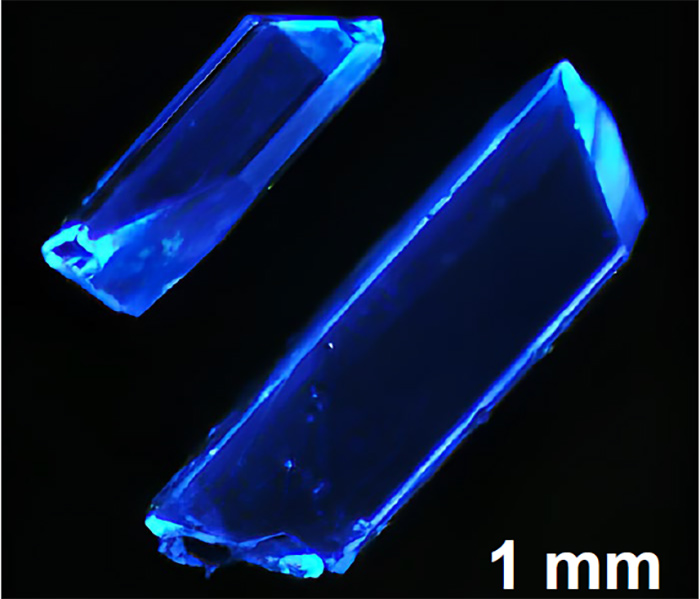
Image source: Rutgers University
According to researchers, this novel hybrid material is not only non-toxic and structurally stable, but also possesses extremely high luminous efficiency. Experimental data shows that its photoluminescence quantum efficiency reaches 99.6%, and its external quantum efficiency reaches 12.6%. Furthermore, the LED device has a half-life of up to 204 hours under normal operating conditions, demonstrating good durability and application prospects.
Researchers point out that currently available blue LEDs generally suffer from problems such as poor stability, high cost, or the presence of toxic substances. For example, perovskite LEDs contain lead, are toxic, and are susceptible to moisture; OLEDs, while flexible, have short lifespans; and quantum dot materials often contain cadmium, posing environmental risks. In contrast, the copper-iodine hybrid material developed by the research team effectively solves these problems, offering greater practicality and sustainability.
This research also innovatively introduced the "dual interfacial hydrogen-bond passivation" technology, which significantly reduces internal interface defects in the device by forming hydrogen bond connections between different layers of the material, thereby improving charge transport efficiency and device performance.
The research team stated that the emergence of new materials not only drives the advancement of deep blue LED technology but also provides a brand-new solution for the commercialization of environmentally friendly and efficient lighting products.


