As 2024 draws to a close, the Micro LED micro-display industry continues to make breakthroughs in areas such as enterprise cooperation and financing, terminal applications, and technological performance improvements, significantly accelerating the commercialization process.
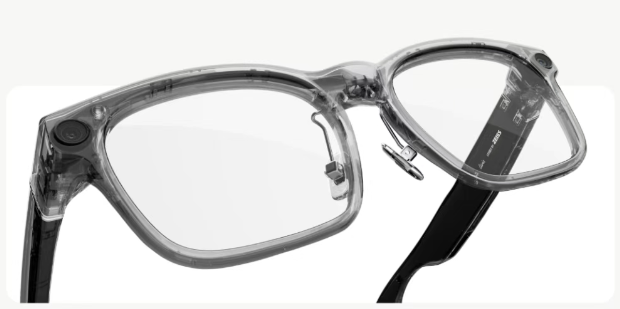
Throughout the year, Micro LED technology continued to develop, with frequent collaborations within the industry. According to incomplete statistics, 17 new collaboration cases were added in 2024. In particular, significant progress was made in the application of Micro LED technology in the AR glasses field, with 8 new Micro LED AR glasses released throughout the year, further promoting the application and popularization of this technology in the wearable device market.
In terms of technological breakthroughs, the Micro LED field has seen several important advancements, including the development of high-brightness, high-resolution displays, the fabrication process of large-size silicon substrate epitaxial wafers, the full-color integration process of quantum dot color conversion pixel integration, and the manufacturing of TFT-based full-color screens for super retina displays.
Furthermore, the continuous introduction of innovations such as maskless lithography technology, conductive adhesives, and cold bonding technology for deep ultraviolet Micro LED displays has driven the rapid development of Micro LED in terms of production efficiency, yield improvement, and application diversity.

In September, Lengneng Optoelectronics and its collaborative team published their full-color integrated process in *Advanced Materials*, demonstrating the fabrication of a 0.39-inch full-color Micro LED chip with 400,000 nits of brightness and 3300 PPI resolution. Subsequently, Lengneng Optoelectronics collaborated with multiple parties to develop key technologies such as silicon substrate epitaxial wafers, misaligned bonding, and sidewall passivation, successfully realizing a 10 million nits green Micro LED microdisplay module.
Novis Technology has also made significant progress in the field of Micro LED microdisplay technology. In April of this year, the company launched the world's first XGA vertically stacked full-color Micro LED microdisplay chip. In September, the company further launched a mass-produced monolithic full-color Micro LED microdisplay chip. Furthermore, to promote the rapid development of its Micro LED microdisplay chip business, Novis Technology completed a RMB 100 million Pre-A2 round of financing in March, led by Lihe Capital.
Sitronix is also accelerating its deployment of Micro LED microdisplay technology. In collaboration with Southern University of Science and Technology, Hong Kong University of Science and Technology, and the National Innovation Center for Third-Generation Semiconductor Technology (Suzhou), it has successfully overcome the maskless lithography technology for deep ultraviolet Micro LED displays, and published its findings in Nature Photonics. This technology uses high-power AlGaN deep ultraviolet Micro LEDs with an emission wavelength of 270 nanometers, an external quantum efficiency of 5.7%, and a brightness of 396 W/cm². It directly displays the exposure pattern through CMOS driving, achieving integration of the pattern and the light source, thus avoiding the complex mask operation process in traditional lithography.
To accelerate the research and industrialization of Micro LED technology, Tianma Microelectronics established a dedicated Micro LED Research Institute and has achieved several technological breakthroughs. In October 2024, a joint research team from Tianma Microelectronics, Xiamen University, and the Xiamen Future Display Technology Research Institute announced the successful manufacture of a 403 PPI ultra-retina TFT-based Micro LED full-color display screen. This achievement marks a significant step forward for Micro LED full-color display technology in the application field.
Besides companies like LONGi Optoelectronics, Norvision Technology, and Sitan Technology, many other research institutions in China are also actively promoting the development of Micro LED technology. These include the University of Science and Technology of China, Zhengzhou University, Xiamen University, Wuhan Optics Valley Laboratory, Jingcai Optoelectronics team, and Fujian Institute of Research on the Structure of Matter, among others. Through their respective technological innovations, they have contributed to the advancement of Micro LED technology.
On the international front, companies and institutions such as Mojo Vision, Seoul National University, Shin-Etsu Chemical, Nagoya University, Lumileds, XDC, Polar Light Technologies, Raontech, VueReal, Aledia, and Q-Pixel have also made a series of advancements in the field of Micro LED technology.
summary
Micro LED display technology has demonstrated enormous market potential due to its significant advantages in brightness, efficiency, and pixel density. Although cost and technological hurdles still need to be overcome during mass production, current momentum indicates that these challenges are being gradually resolved.
TrendForce's analysis shows that with continuous technological advancements, Micro LED technology has made breakthroughs in the field of large-size commercial displays and is expected to play an important role in the automotive display market in the future, especially in applications such as automotive center consoles, instrument panels, AR HUDs, and transparent displays.
Based on these positive development factors, TrendForce predicts that the Micro LED chip market value is expected to reach $600 million by 2028. This figure only represents the market value of Micro LED chips; if other links in the Micro LED industry chain, such as technology transfer, testing equipment, and backplanes, are taken into account, the total industry value will far exceed this amount. It is believed that with the joint efforts of the industry chain, the era of prosperous development for the Micro LED industry is expected to arrive sooner.